Review: US Army Veteran, American Flag Design
As a designer who spends more time staring at stitch maps than most people spend looking at actual art, I approach every new machine embroidery design with a healthy dose of skepticism. We have all been burned by files that look crisp on the screen but turn into a bird's nest of thread breaks and puckering on the hoop. So, when I pulled up the US Army Veteran, American Flag graphic to evaluate it for a potential run of custom apparel, I wasn't just looking at the aesthetics; I was mentally simulating the needle path.
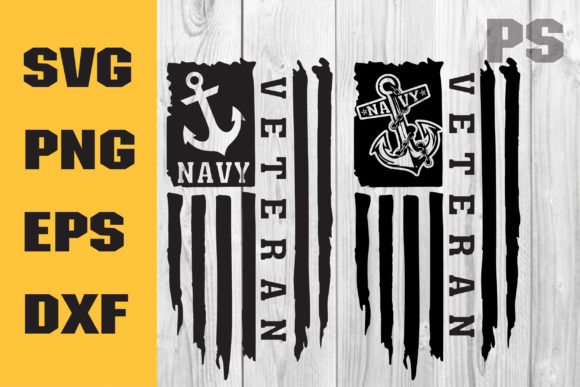
This isn't just a clipart download; for those of us in the craft business, it is a potential revenue stream. The source files are listed as SVG, PNG, DXF, and EPS, which tells me immediately that this is primarily a vector graphic intended for cutting machines like Cricut or Silhouette, or for print-on-demand workflows. However, the question I always ask is: can this cross over into the world of stitching? Can this digital embroidery file concept hold up under the tension of a hoop and the pull of polyester thread?
First Impressions and Visual Personality
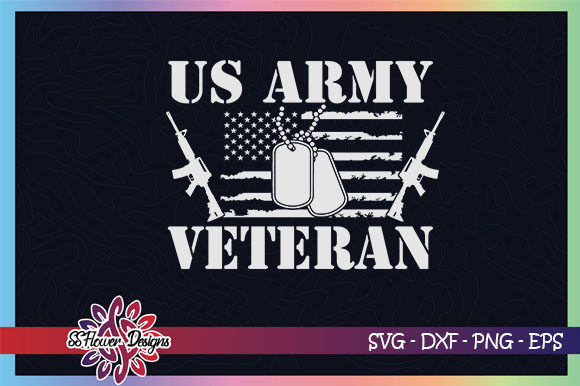
The first thing that strikes you about the US Army Veteran, American Flag composition is its boldness. There is no hesitation in the lines. The silhouette of the soldier combined with the stripes of the flag creates a strong, patriotic mood that feels respectful rather than cartoonish. For an embroidery project, this is crucial. Delicate, overly intricate details often get lost when scaled down for a left-chest logo or a hat front. This design, however, relies on solid shapes and clear negative space.
From a visual standpoint, the layout suggests a natural fit for a satin stitch application if digitized correctly, or perhaps a dense fill stitch for the flag portion to give it weight. The "personality" of the design is serious and commemorative. It feels at home on heavy cotton twill, denim, or structured caps. It does not feel like a design meant for a sheer baby onesie unless heavily simplified. The contrast between the figure and the background elements suggests that if you were to stitch this, thread color selection would be paramount. You would need high-contrast thread colors to ensure the veteran figure doesn't bleed into the flag stripes.
Real-World Application: The Tote Bag Test
To truly gauge the viability of this asset, I imagined a specific real-life scenario: a custom order for a local VFW post reunion. The client wanted fifty tote bag designs featuring this specific motif. This is a common request for Etsy sellers and small shop owners—bulk orders for events where durability matters.
If I were to translate this US Army Veteran, American Flag graphic into a stitched finished product, the tote bag is an ideal candidate. The canvas fabric provides enough stability to handle the density required for the flag stripes without excessive puckering. In this context, the design acts as a centerpiece. I can visualize using a metallic gold thread for the text elements (if included in your specific digitization) or a stark white against a navy bag to make the American flag svg elements pop.
However, because the source files are graphics (SVG/EPS) and not pre-digitized embroidery files (PES/DST), the responsibility falls on the decorator to convert this properly. If you are an embroidery designer taking this from the Crafts category into production, you cannot simply import the SVG and hit "stitch." You must manually create the underlay. For the flag portion, a tatami fill with varying angles would prevent the "grinning" effect where the fabric shows through. For the veteran silhouette, a clean satin column would provide the sharp definition needed to honor the subject matter.
Navigating Fabric Textures and Limitations
While the design shines on sturdy materials, caution is required elsewhere. If you attempt to apply this to a stretchy performance tee or a thin tri-blend shirt, the stitch density required to fill those flag stripes could cause significant distortion. The fabric might gather around the design, ruining the drape of the garment. In these cases, I would recommend treating the US Army Veteran, American Flag as an appliqué concept.
Using the SVG cut file to create a fabric patch that is then tacked down with a narrow satin stitch border is a smarter move for textured or stretchy fabrics. This reduces the amount of thread buildup on the garment while maintaining the visual impact. It also adds a tactile element that customers love in handmade products. An embroidered patch approach allows the design to sit on top of the fabric rather than sinking into it, preserving the integrity of the lines.
Curved surfaces present another challenge. Placing this on a structured cap is feasible, but the width of the flag needs to be checked against your available hoop size. If the design is too wide, you may have to break it into sections or reduce the scale, which risks losing the legibility of the veteran figure. Always test on scrap fabric of the same weight and texture before committing to the final item.
Commercial Value and Customer Trust
For the small shop product creator, the perceived value of a design like this is high. Patriotic themes sell year-round, peaking around Memorial Day, Veterans Day, and the Fourth of July. But the quality of the execution dictates whether a customer sees a cheap souvenir or a premium personalized gift.
When a customer sees a clean, well-stitched representation of the US Army Veteran, American Flag, it builds immediate trust. It signals that the maker cares about precision. Conversely, sloppy stitching or poor color choices can be seen as disrespectful to the theme. Therefore, the "review" of this design extends beyond the file itself to how it is executed. Using a high-quality stabilizer is non-negotiable here. A cut-away stabilizer would be my choice for any garment that expects frequent washing, ensuring the design remains stable and doesn't warp over time.
Furthermore, for those creating printable mockups or digital listings, this graphic offers excellent versatility. The 300 PPI PNG mentioned in the description ensures that your online previews will look crisp, helping to drive sales for your custom apparel or holiday embroidery collections. Just remember to clearly state in your listings whether the customer is buying a physical stitched item or a digital file for their own use.
Final Verdict for Designers
The US Army Veteran, American Flag is a robust graphic with strong potential for translation into the embroidery realm, provided the technician respects the medium. It is not a "plug-and-play" embroidery file, but rather a high-quality design asset that serves as a perfect foundation for custom work.
Before you list this on your Etsy shop or pitch it to a client, do your homework. Check the licensing terms explicitly regarding commercial use of the finished stitched items versus the digital file. Test your digitization on black and white fabric to ensure the contrast holds up. Verify that your running stitch outlines are tight enough to prevent fraying if used as an appliqué template.
In the hands of a skilled decorator, this design elevates a simple piece of fabric into a statement piece. It bridges the gap between Graphics and tangible tribute, offering a way for makers to create meaningful baby embroidery gifts for military families, durable gear for veterans, or boutique branding for patriotic businesses. Just treat the file with the respect the subject matter deserves, and the results will speak for themselves.